
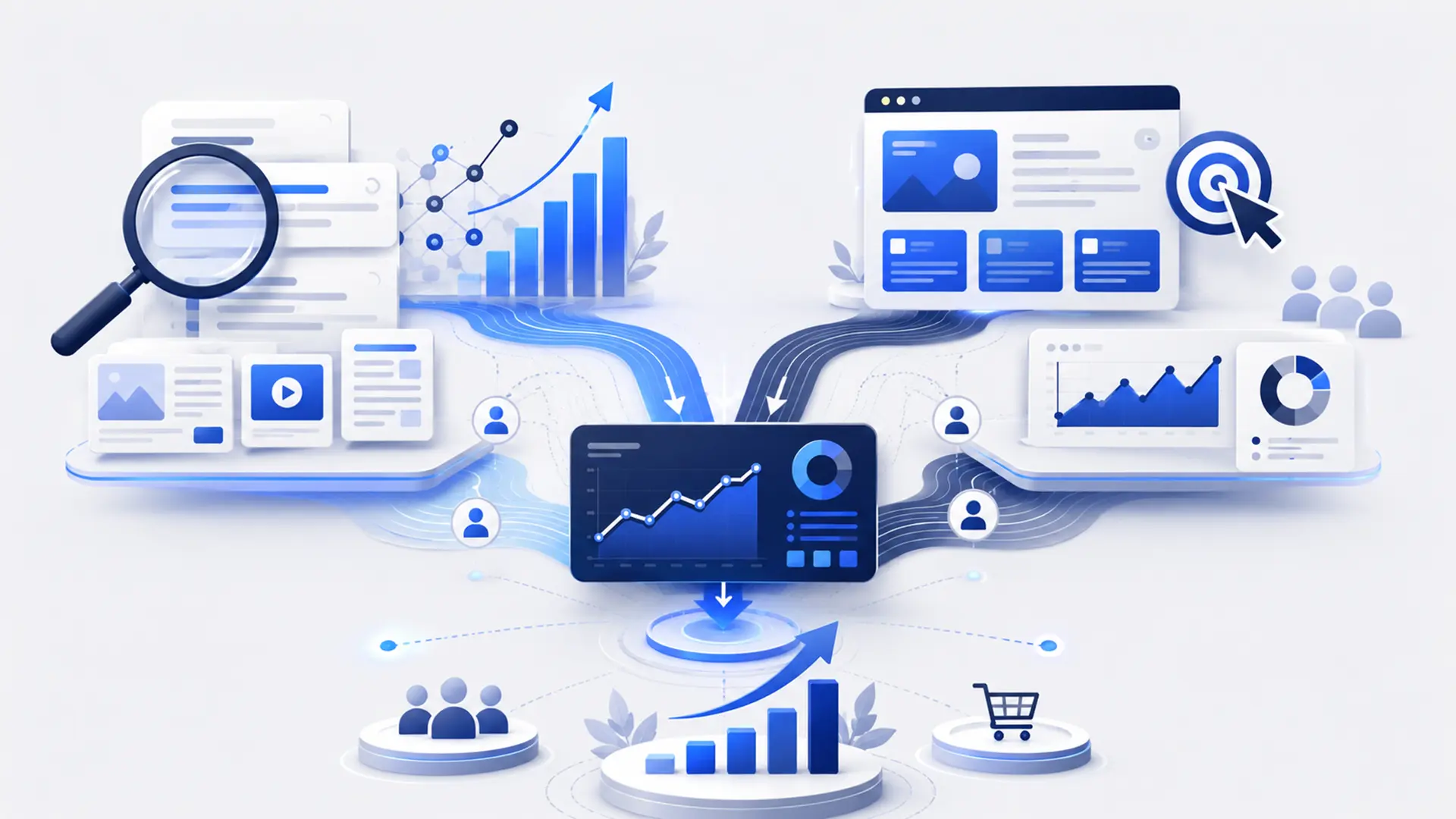
When a business wants to acquire more customers through Google, one of the most common questions is whether to invest in SEO or allocate budget to Google Ads. Both channels aim to reach people who are actively searching, but they differ in how they work, how quickly they can produce results, their cost structures and their long-term impact.
SEO is a long-term process focused on improving a website’s visibility in organic search results. Google Ads can provide faster visibility by purchasing ad placements for specific searches. The better question is therefore not “which one is better?” but “which channel is more suitable for which business goal?”.
For some businesses, generating demand quickly through advertising is the priority. Others want to build strong organic visibility that can reduce dependence on paid traffic over time. In many cases, the most effective model is to plan SEO and Google Ads together as two channels with different roles rather than treating them as alternatives.
What Is SEO and How Does It Work?
SEO is the set of practices used to help search engines understand a website more effectively and improve its visibility in relevant organic search results. Technical structure, page architecture, content quality, internal linking, user experience and site credibility are all part of the process.
With SEO, you do not pay directly for every click. Instead, investment goes into technical improvements and editorial work that strengthen the website and its content over time. Results usually develop gradually, and the timeline can vary significantly depending on the industry, competition, the site’s current condition and content quality.
One of SEO’s strengths is its potential to generate ongoing organic traffic from different searches without depending on a single campaign. However, visibility is not guaranteed and requires regular technical monitoring, content development and competitive analysis.
At Webrote, our approach to SEO is not simply to add keywords, but to evaluate technical structure, content architecture and search intent together.
What Is Google Ads and How Does It Work?
Google Ads is an advertising platform that allows businesses to run paid ads for specific searches, audiences or placements. With search ads, a business can show ads based on a potential customer’s query, and many campaign types can be optimized around actions such as clicks or conversions.
A key advantage of Google Ads is that campaigns can be launched quickly when the account and campaign structure are configured correctly. This is especially useful for a new business, a seasonal campaign, a new product or any project that needs to generate demand quickly.
Paid visibility depends on budget. When a campaign stops or the budget runs out, paid search visibility does not continue on its own. Google Ads is therefore not simply about buying traffic; it requires ongoing management of budget, search terms, bidding strategy and conversion data.
In Google Ads management, the goal is not to maximize clicks, but to acquire traffic that produces meaningful business conversions at an appropriate cost.
Key Differences Between SEO and Google Ads
| Criteria | SEO | Google Ads |
|---|---|---|
| Visibility type | Organic search results | Paid ad placements |
| Time to initial visibility | Usually slower and gradual | Faster once the campaign is approved |
| Cost model | Technical, content and operational investment | Ad budget + management/optimization |
| When budget stops | Existing organic visibility may continue | Paid visibility decreases or stops directly |
| Control | No direct control over rankings | More control over targeting, budget and ads |
| Testing speed | Data may accumulate more slowly | Search term and conversion data can be collected faster |
| Long-term value | Content value and site authority can accumulate over time | Performance depends on budget and campaign management |
These differences do not mean SEO is always more economical or that Google Ads will always generate sales faster. Performance in both channels depends on the industry, offer, website, competition, pricing and campaign quality.
SEO or Google Ads? Define the Goal First
Choosing the right channel starts with what the business wants to achieve and how quickly it needs to achieve it. A business testing demand for a new service will have different priorities from an established company trying to strengthen its organic visibility.
- Do you need to generate enquiries or sales quickly?
- Are you testing market demand for a new product or service?
- Do you want to build organic traffic and brand visibility over the long term?
- Are you targeting rapid growth in a specific region or service?
- Do you want to balance current advertising costs over time?
- Does your website already have strong content and a solid technical foundation?
If these goals are unclear, SEO and advertising budgets can easily turn into disconnected activities. The commercial objective should be defined first, followed by channel selection.
Which Is More Suitable When You Need Faster Results?
If a new product has launched, a season has started or the business needs to generate demand quickly, Google Ads usually provides a faster way to test the market. A campaign can be activated quickly, focused on specific searches and used to observe which terms generate traffic or conversions.
SEO usually does not produce results at the same speed. A new page may need time to be crawled, evaluated, gain visibility for competitive queries and generate consistent traffic. Relying on SEO alone for an immediate sales requirement may therefore be unrealistic.
However, getting traffic quickly does not automatically make advertising profitable. If the website, offer, pricing or sales process is weak, Google Ads may simply expose the problem faster.
Which Is Better for Long-Term Visibility?
SEO can provide a stronger foundation for building long-term organic visibility. Well-structured service pages, category architecture and guide content can begin generating traffic from different searches over time.
The value of SEO is not simply that clicks are unpaid. Strong content and site architecture can help users encounter the brand across different queries from the research stage through to the purchase decision. Organic visibility is therefore also part of building brand awareness and trust.
SEO is not a permanent position that can be achieved once and left untouched. Competitors continue publishing, search behavior changes and the site keeps evolving. Maintaining organic visibility requires ongoing technical and content operations.
How Do SEO and Google Ads Compare on Cost?
The simple comparison that SEO is “free” while Google Ads is “paid” is misleading. SEO does not charge a direct advertising fee for every click, but it still requires time and budget for technical development, content production, analysis and ongoing optimization.
With Google Ads, the advertising budget directly purchases visibility. Click costs can rise in competitive markets, and campaigns using the wrong keywords, poor match structures or no conversion tracking can consume budget quickly.
A useful cost comparison should focus less on monthly SEO versus Ads fees and more on customer acquisition cost, conversion quality and the channel’s long-term contribution.
How Does Competition Affect the Decision?
Competition affects both SEO and Google Ads. Gaining organic visibility can take longer and require more investment in search markets where many strong sites have been publishing for years. Likewise, Google Ads click costs tend to rise in industries where many advertisers are bidding.
Rather than focusing on one broad keyword, search intent should be segmented. More specific searches based on service, location, problem, product type or decision stage can create more efficient opportunities in both SEO and paid search.
The purpose of competitive analysis is not to copy everything competitors do, but to determine where direct competition makes sense and where a more efficient path can be found.
Why Do Website and Landing Page Quality Matter for Both Channels?
SEO and Google Ads can bring users to a website, but the website is usually where the conversion happens. A slow, untrustworthy, difficult-to-use mobile page or one that fails to explain the offer clearly can reduce the performance of both channels.
In Google Ads, a poor landing page can contribute to higher advertising costs and lower conversion rates. In SEO, weak user experience can limit content performance and the commercial value of the page.
- Does the page genuinely answer the user’s search intent?
- Is the value of the product or service clear at first glance?
- Is the mobile experience easy to use?
- Are form, phone or purchase actions clear?
- Is the page fast and technically stable?
- Is there content, proof or supporting information that builds trust?
For this reason, before marketing investment begins, the website and conversion structure should also be evaluated.
How Can SEO and Google Ads Data Be Used Together?
When the two channels are used together, each can provide valuable data for the other. Google Ads can show more quickly which searches generate clicks and conversions, and that information can be used as an important signal when prioritizing SEO content.
Queries where the site is already strong organically may help redirect ad budget toward other opportunities. Reviewing Search Console, Analytics and advertising data together can also provide a clearer view of which searches bring users in and which pages generate conversions.
The goal is not to make both channels compete blindly on the same keywords, but to manage total search visibility and customer acquisition efficiency as one system.
When Should You Start with SEO First?
SEO can be a strong starting point when the business has long-term growth goals, especially in industries where users conduct significant research before purchasing.
- If there is consistent search demand for the service or product,
- If the business wants to build long-term organic visibility,
- If the website has strong service or category pages that can be developed further,
- If users search for guides and comparison content before making a decision,
- If immediate sales pressure is not extremely high,
- If regular resources can be allocated to content and technical development, SEO may be prioritized.
When Should You Start with Google Ads First?
Google Ads can be a more suitable first channel for businesses that need visibility and data quickly. It is especially useful when the commercial demand for a specific product or service needs to be tested fast.
- If a new website or brand needs to generate customer demand quickly,
- If there is a seasonal or time-sensitive campaign,
- If the conversion potential of a new service needs to be tested,
- If rapid visibility is needed in specific locations or search queries,
- If organic visibility has not yet been established,
- If there is a ready website and sales process where conversions can be measured, starting with Google Ads can make sense.
Should SEO and Google Ads Be Used Together?
For many businesses, the most practical answer is yes. However, simply allocating budget to both channels is not enough; each channel should have a clearly defined role.
Google Ads can capture demand from commercial queries in the short term, while SEO builds content and organic visibility over a longer period. Search term and conversion data from ads can inform the SEO strategy, and as SEO becomes stronger, advertising budget can be redirected toward more competitive or new opportunities.
Webrote’s digital marketing approach treats channels not as isolated activities but as a system that works together around the website and sales objectives.
SEO or Google Ads? Frequently Asked Questions
When comparing SEO and Google Ads, similar questions often come up around timing, cost, budget and using the channels together. Below, we answer the most common questions that arise when deciding how to allocate effort and budget.
Which Is Cheaper, SEO or Google Ads?
A single price comparison is not very useful. SEO requires technical, content and operational investment, while Google Ads requires ongoing optimization in addition to ad spend. The better comparison is based on customer acquisition cost and long-term contribution.
Do You Need SEO While Running Google Ads?
It is not mandatory, but for many businesses the two channels complement each other. Advertising can generate short-term demand while SEO builds long-term organic visibility, and advertising data can help shape SEO priorities.
Should Google Ads Be Stopped Once SEO Starts Producing Results?
Not automatically. Even with strong organic visibility, ads can generate additional demand for different products, locations, campaigns or highly competitive queries. The decision should be based on conversion and profitability data rather than the channel alone.
Should a New Website Start with SEO or Google Ads?
If customer demand or data is needed quickly, Google Ads may provide a faster start. At the same time, the SEO foundation should be built when the website launches. The best sequence depends on the business’s budget and timeline.
Can Google Ads Work with a Poor Website?
Ads can bring traffic to the website, but a slow, untrustworthy site or one with a weak conversion flow can seriously limit advertising performance. Improving the landing page and sales process may be more effective than increasing ad spend.
Build the Right System Before Choosing the Right Channel
When choosing between SEO and Google Ads, traffic should not be the only objective. Acquiring the right customers, directing them to the right pages and measuring conversion are more important.
Google Ads can be the faster tool when short-term demand is needed. SEO can be a strong investment for long-term organic visibility and content value. When budget and operations allow, planning both channels together can create a more balanced customer acquisition system for many businesses.
If you want to evaluate which channel to start with or how your existing SEO and advertising activities should work together, you can explore our Marketing services or tell us about your project.
Leave a Reply